Visual Search Intent
Pinterest users are planners. They search for ideas, solutions, and products. This makes them highly primed for helpful affiliate recommendations.
Traffic Strategies
Pinterest isn't just for recipes and home decor. It's one of the most powerful discovery engines for affiliate marketing traffic.
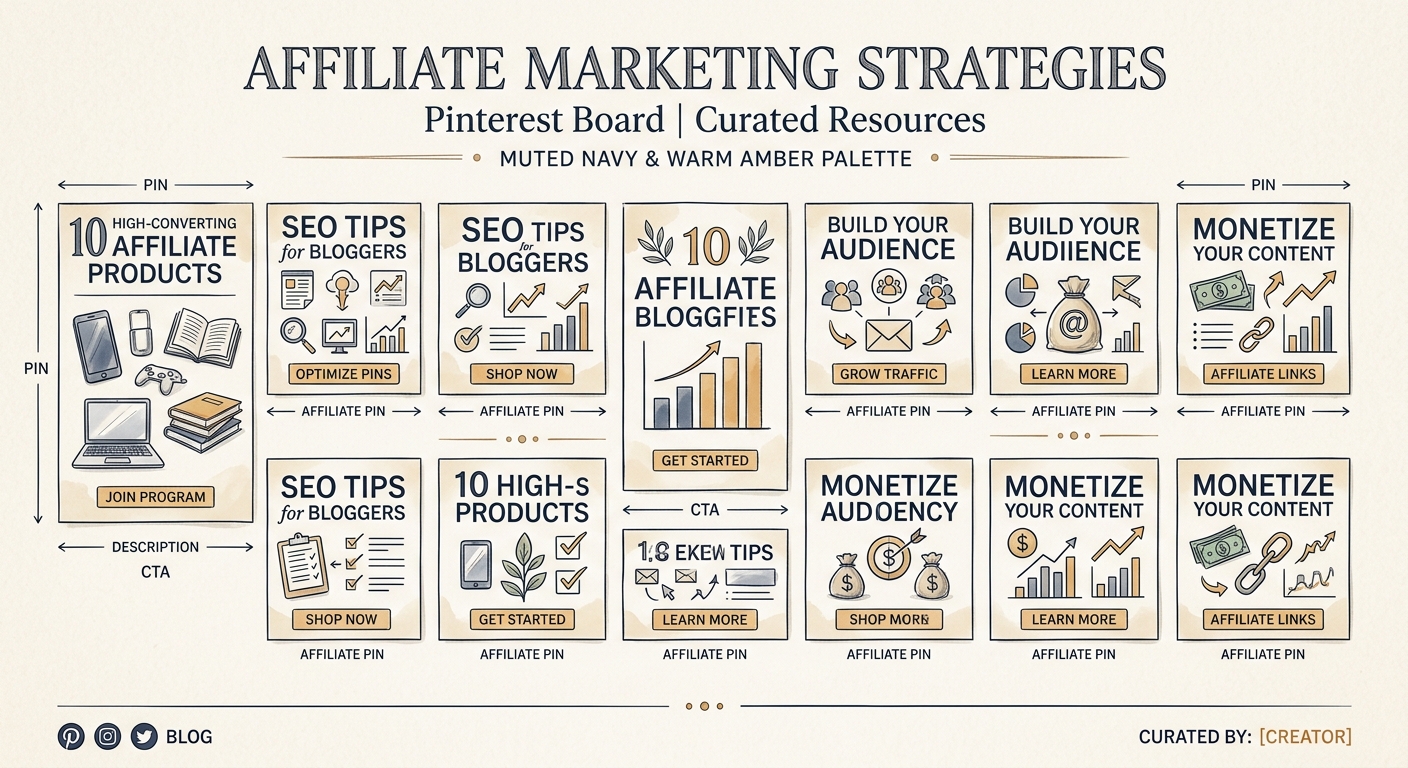
The Discovery Engine
Many beginners treat Pinterest like Facebook or Instagram. They focus on followers and engagement. This is a mistake.
Pinterest is a visual search engine. People go there with intent—they are looking for ideas, projects to start, or products to buy. This makes it an incredible source of high-quality traffic for affiliate marketers.
The best part? You don't need a huge following to get traffic. A brand-new account can get thousands of impressions if the content is helpful and well-optimized for search. Learn more about how this fits into your broader traffic strategy here.
Four Pillars of Pinterest Success
Pinterest users are planners. They search for ideas, solutions, and products. This makes them highly primed for helpful affiliate recommendations.
Pins, boards, and profiles must be optimized with keywords so your content shows up when users search for specific solutions in your niche.
Unlike Instagram, Pinterest is built to drive traffic away from the platform. Every pin can be a direct bridge to your helpful affiliate content.
A good pin can keep driving traffic for months or even years. It compounds over time as more people save it to their own boards.
The Setup
To succeed with Pinterest, you need a Business account. This gives you access to analytics, which tells you exactly which pins are driving the most clicks.
Your profile should be clear and keyword-rich. Tell people exactly what problem you help them solve. Use your boards to organize your content into logical categories—just like you do with your topic hubs.
When creating pins, focus on high-quality visuals and clear, benefit-driven text overlays. Using a tool like the Affiliate Hook Generator can help you find the right words to stop the scroll and earn the click.
Remember to always be honest and transparent. Disclose your affiliate links clearly in your pin descriptions to maintain trust with your audience and the platform.
Implementation
Once you have traffic flowing, make sure you are sending them to content that builds real trust before asking for a sale.
These resources will help you master more traffic sources and conversion strategies.
If you want a more guided approach to building your first affiliate system, check out our recommended path.