Blogging (The Text Path)
Best for those who prefer writing and quiet research. You own the platform fully and focus on Search Engine Optimization (SEO) to bring in visitors.
Traffic Strategies
Deciding where to build your audience is the first big choice you'll make. Here is how to pick the path that fits your strengths.
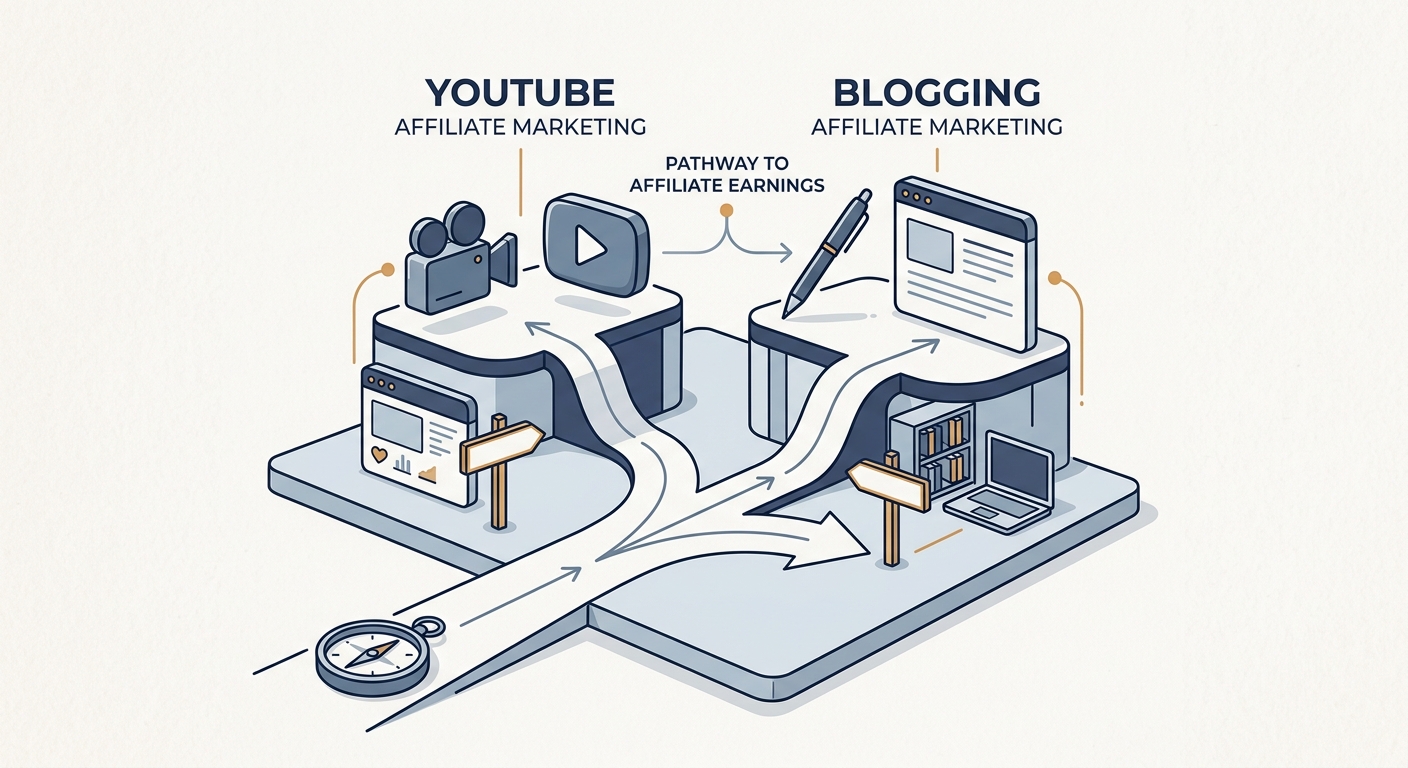
The Great Debate
When you start affiliate marketing, you need a way to get your message in front of people. While there are dozens of social platforms, the two "heavyweights" for long-term growth remain YouTube and Blogging.
Neither is "better" in a vacuum. The right choice depends entirely on your personality, your niche, and how you prefer to spend your working hours. Some people thrive in front of a camera, while others do their best work through a keyboard.
If you're still exploring the basics of how people find your offers, start with our Traffic Strategies Hub for the full overview of free discovery.
Side-by-Side Comparison
Best for those who prefer writing and quiet research. You own the platform fully and focus on Search Engine Optimization (SEO) to bring in visitors.
Best for personality-driven creators. Video builds trust faster and the YouTube algorithm can help new channels get discovered quickly.
A blog gives you full control over your layout and monetization. YouTube is a borrowed platform, but it offers massive built-in reach.
Blogging requires writing and basic tech setup. YouTube requires speaking, basic editing, and an understanding of visual storytelling.
Making the Choice
The most important rule for beginners is to pick one and stick with it. Trying to run a YouTube channel and a blog at the same time usually results in neither of them getting the momentum they need to succeed.
If you choose blogging, you'll spend most of your time researching keywords and refining your writing. You'll need to master SEO for beginners to ensure your articles show up in Google search results.
If you choose YouTube, you'll focus on titles, thumbnails, and the first 30 seconds of your video. Video allows you to demonstrate products in real-time, which often builds trust faster than text alone.
Whichever path you choose, you'll need a steady stream of topics to cover. Using a tool like the Content Idea Expander can help you turn a single niche idea into a full content calendar for either platform.
Implementation
Once you've chosen your platform, the next step is learning how to create content that actually converts.
Explore more ways to grow your traffic and build a sustainable affiliate business.
If you want to see exactly how to build a profitable affiliate system on either platform, check out our top recommendation.