FTC Disclosures
Clear and conspicuous notification that you earn a commission if someone buys through your link.
Compliance Guide
Earning commissions is the goal, but staying legal is the foundation. Learn the essential disclosures every beginner needs to know.
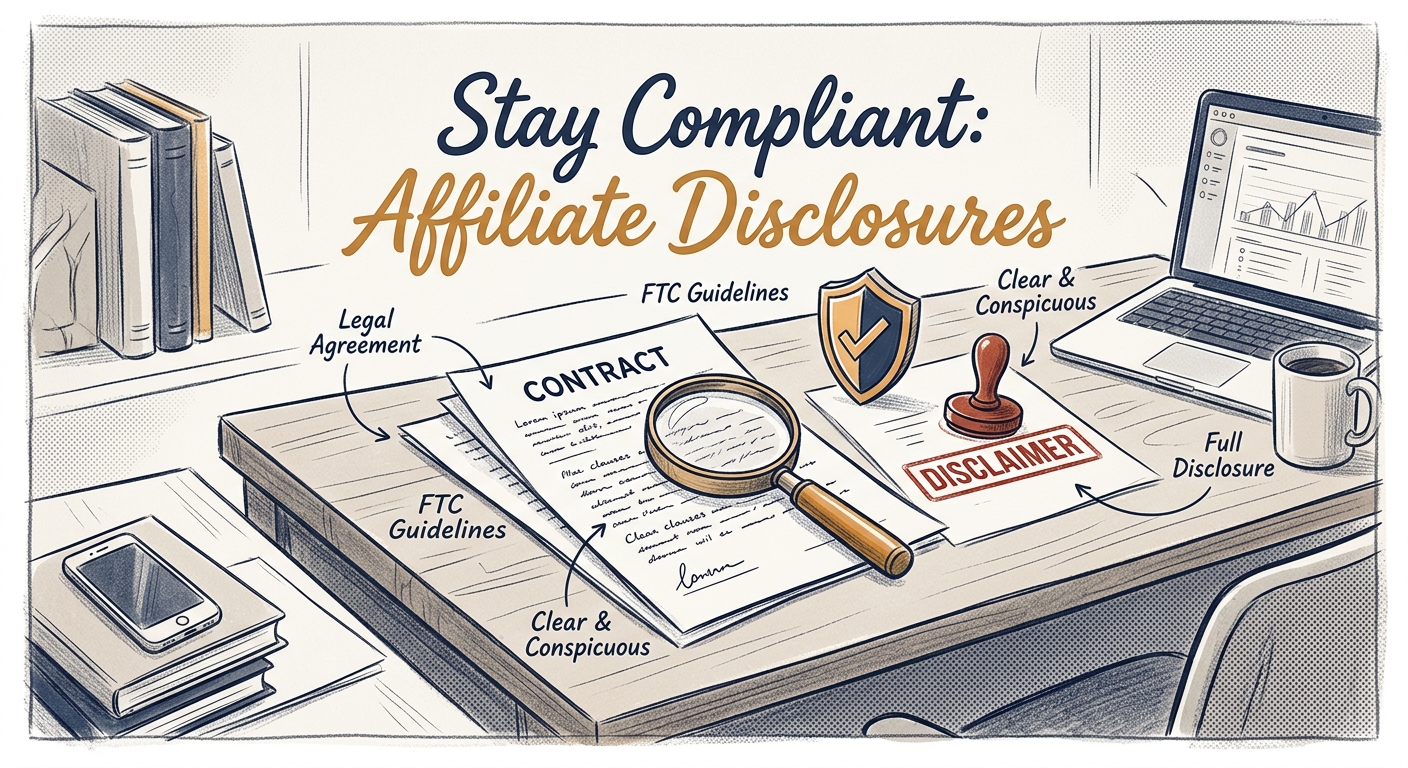
Most beginners think affiliate marketing is just about finding products and sharing links. But as soon as you start promoting products for money, you are entering a regulated space.
The good news? Staying legal isn't complicated. It mostly comes down to being honest with your audience. Regulatory bodies like the FTC (Federal Trade Commission) in the US want to ensure that consumers know when they are being advertised to.
If you are just starting your journey, make sure you have the foundations of affiliate marketing right before you scale.
The three pillars
Clear and conspicuous notification that you earn a commission if someone buys through your link.
A mandatory legal page explaining how you collect, use, and protect visitor data on your site.
Defining the rules of your site and clarifying that your content is for informational purposes only.
The FTC requires that you disclose your relationship with a brand whenever you share an affiliate link. This disclosure must be "clear and conspicuous."
Where to put it: It should be close to the link itself or at the very top of the page. Do not hide it in a footer or a separate "Legal" page.
What to say: You don't need a legal degree. Something as simple as "I may earn a small commission if you buy through my link at no extra cost to you" works perfectly.
→ See how this fits into your overall start-up strategy.
Every affiliate website needs three core legal pages to look professional and stay compliant with both laws and ad platforms like Google and Meta:
We have these live on our site: Privacy, Terms, and Disclaimer.
In addition to the law, specific platforms have their own rules. Amazon Associates, for example, requires a very specific sentence in your disclosure stating you are an Amazon Associate.
Social media platforms like TikTok and Instagram also require you to use disclosure tools (like the "Paid Partnership" label) or hashtags like #ad or #sponsored.
Don't let legal worries stop you from starting. Set up your disclosures once, and then focus on what matters: helping your audience.
Start With a Small BudgetExplore our main affiliate marketing hub for more guides on starting and growing your business the right way.
Back to Affiliate Marketing Hub