1. A publishing home base
A simple website or landing-page setup where your content can live, rank, and connect into one clear path.
Tools Article
Build the smallest stack that helps you publish, learn from real data, and grow an audience without wasting money on shiny extras.
Start with the job
The best beginner tool stack is smaller than most “must-have tools” articles make it sound. You do not need a giant funnel platform, three SEO subscriptions, and a dozen AI add-ons just to get your first useful pages live.
You need tools that help you publish, capture interest, and learn what readers respond to. If a tool does not help with one of those jobs, it is probably not helping yet.
Lean stack
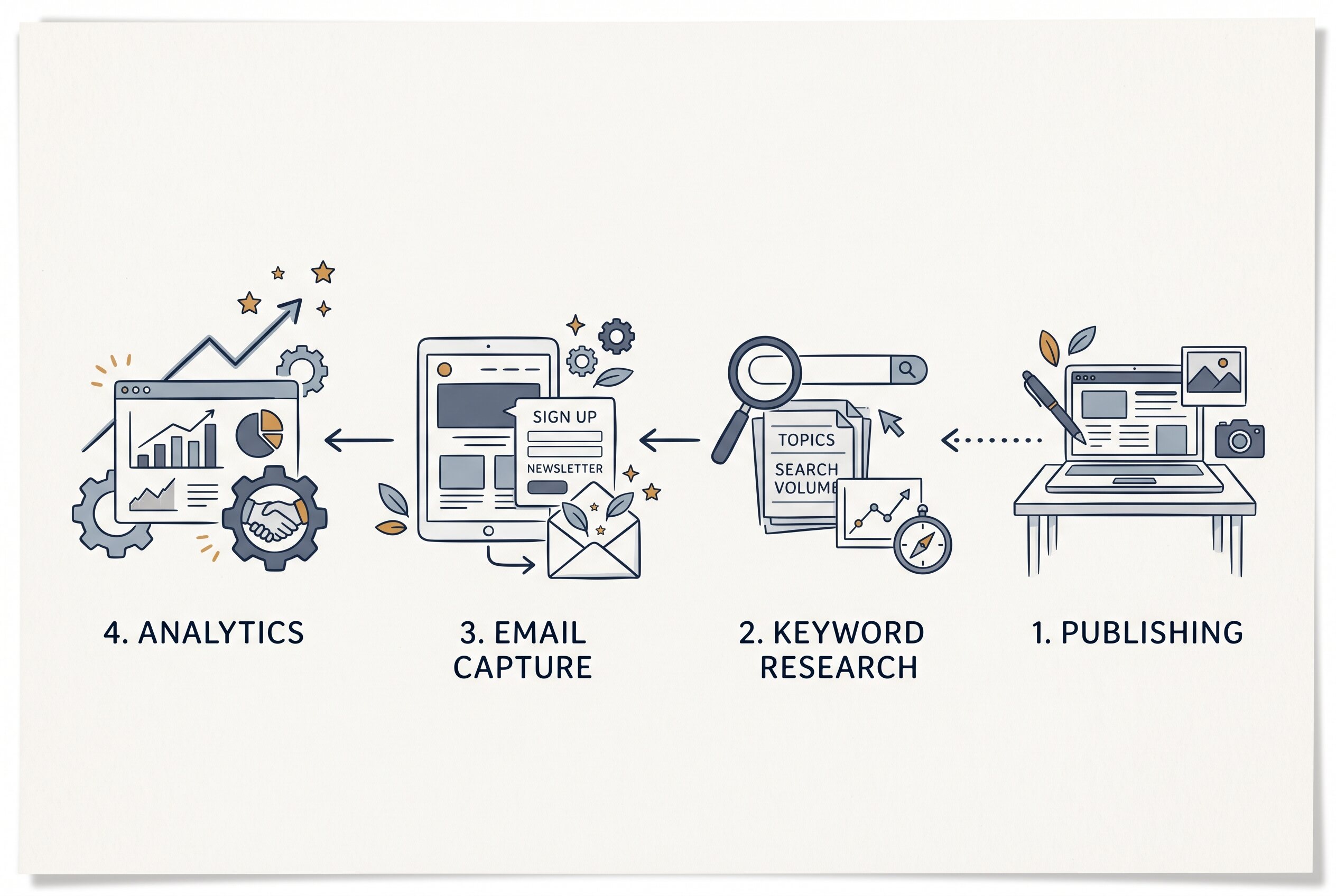
Think in categories first. Specific product choices come after you know what each category is for.
A simple website or landing-page setup where your content can live, rank, and connect into one clear path.
You need a way to spot real questions, compare topic angles, and decide what to publish next.
A basic form and welcome sequence help you keep the audience you earn instead of losing them after one visit.
Traffic and behavior data show what to improve once a page starts getting attention.
Writing, outlining, and visual tools can speed up production, but only after the strategy is clear.
The practical order
Start with the smallest stack that lets you publish and learn. The point is not to assemble the perfect ecosystem.
Start with one clean place where your articles, recommendations, and opt-ins can live together.
Use one repeatable way to choose topics with real beginner intent instead of guessing each week.
Keep the audience you earn instead of starting from zero every time someone leaves the page.
Use just enough data to see what attracts attention before buying more software.
Once you have traffic and a clearer content pattern, you can add better tooling. Before that, extra software usually just adds decisions.
What to skip
Some tools are useful later, but not right now. If you are still choosing a niche or publishing your first pages, do not buy things just because they sound advanced.
Skip for now
High-ticket software bundles before you have steady traffic
Skip for now
Complex automations before you have a clear opt-in path
Skip for now
Paid tools bought mainly because another affiliate listed them
Skip for now
Anything that adds maintenance without helping you publish or learn faster
Bottom line
A two-tool stack you actually use will outperform a ten-tool stack you barely log into. That is especially true early on, when the real work is still choosing topics, writing, and learning what people care about.
If you have not picked a niche yet, do that before buying more software. Tool choices get easier after your audience and content angle are clear.
Next, read how to choose a profitable affiliate marketing niche.
Buying rules
Upgrade when a tool removes a real constraint, not when a promo page makes you feel behind.
Publishing, research, email, and analytics should each solve a simple problem you can explain in one sentence.
More software makes sense after you have evidence that more content, more leads, or more testing is actually needed.
These guides help you make smarter tool decisions by clarifying your niche, model, and offer choices first.
Go back to the main tools guide if you want the big-picture beginner setup before choosing specific tools.
Return to Affiliate Marketing Tools