Real problem depth
Can one audience in this niche ask 20 to 50 useful beginner questions you could answer over time?
Step-by-Step Article
Choose a niche by looking for real audience problems, clear product fit, and enough depth to keep publishing useful content.
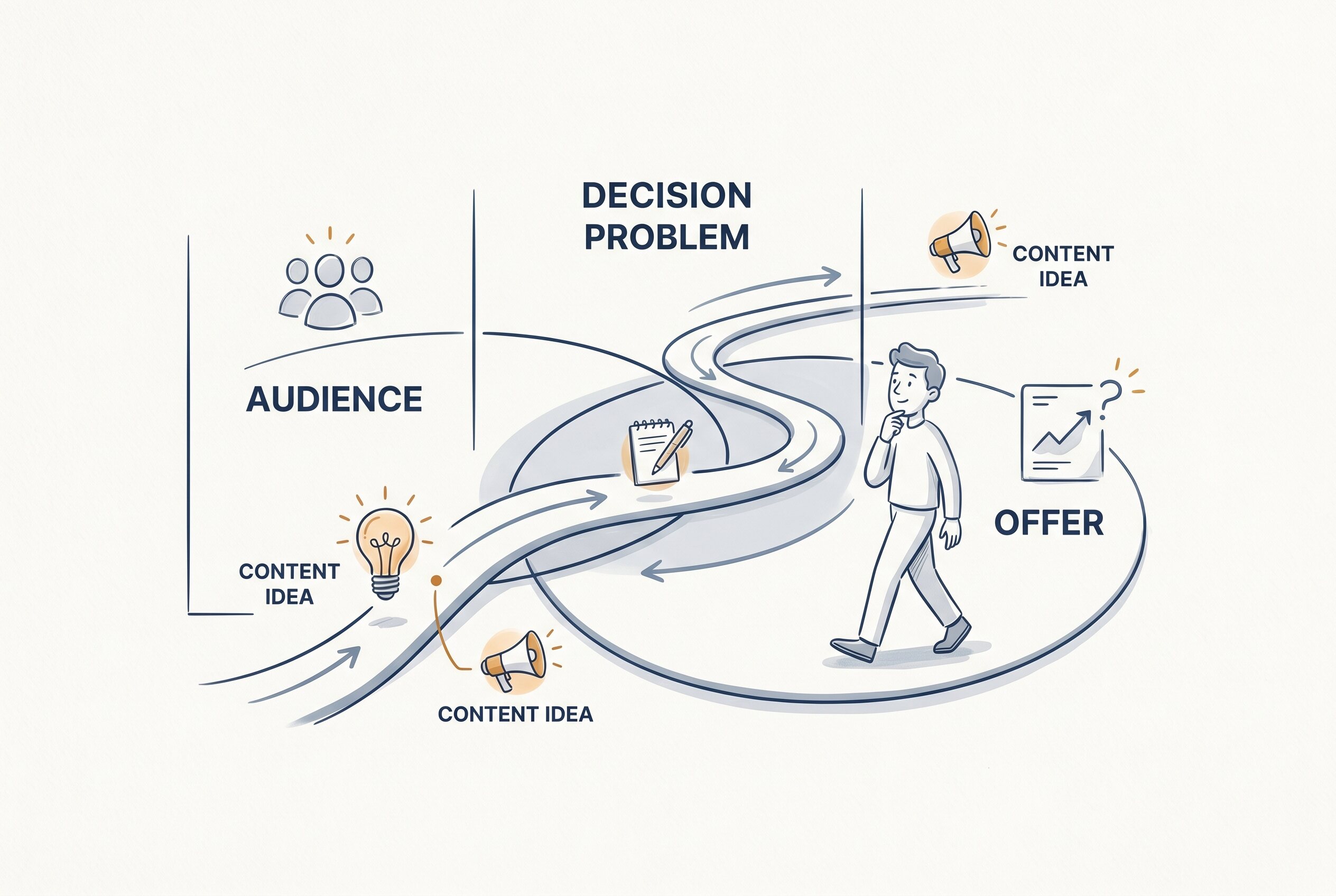
Start with the audience
“Profitable niche” sounds like a keyword tool problem. For beginners, it is usually a fit problem first.
The best niche is not the one with the flashiest commission screenshots. It is the one where you can repeatedly help a specific kind of person make a decision, solve a problem, or avoid a mistake.
Niche filter
Use this as a quick filter before you invest weeks into a topic that will not hold.
Can one audience in this niche ask 20 to 50 useful beginner questions you could answer over time?
Are there products, software, services, or courses that naturally solve the problems people have here?
Can you keep publishing comparisons, tutorials, checklists, and answers without running out of useful angles?
Do you care enough about the topic to keep learning after the first few articles are live?
Search helps, but only after the audience is clear
The right order keeps you from picking a niche that looks profitable on paper but dies the moment you try to build around it.
Start with a group of people who repeatedly need help making decisions or solving problems.
Check that useful products or services naturally connect to those problems.
Commission size matters later. It does not rescue a weak audience fit or a topic you cannot sustain.
Search suggestions and keyword tools are useful because they show the language people already use. They help you find real problems and group related intent together.
Simple test
Examples that are specific enough
Notice how each example points to a specific audience and a specific problem set. That is much easier to build around than a giant topic like fitness or pets.
Red flags
Red flag
You picked it only because someone said it pays well.
Red flag
You cannot think of useful content ideas past the first few posts.
Red flag
The only angle you have is best products with no real perspective.
Red flag
You would be bored writing about it after two weeks.
If two or more of those are true, slow down. A niche should feel workable, not like a dare.
The rule of thumb
The overlap rule
People need help repeatedly, not just once.
Good products solve those problems naturally.
You can keep publishing without running dry.
Then build one cluster at a time. Start with a beginner guide, a worth-it piece, a tools page if relevant, and practical how-to content. That is sturdier than scattering effort across random keywords.
If you still are not sure what kind of setup fits you, read the beginner business model guide next.
These pages help you choose a path, set expectations, and keep your first niche plan grounded.
Once your niche is clearer, go back to the main step-by-step guide and build the rest of the plan around it.
Return to the step-by-step roadmap