Google SEO
Best For: Deep research, reviews, and high-intent problems.
Pace: Slow start (3-6 months), strongest long-term compounding.
Primary Effort: High writing focus, low technical production.
Channel Comparison
A direct comparison of the three most popular traffic paths for affiliate beginners. Learn how to match your channel to your strengths.
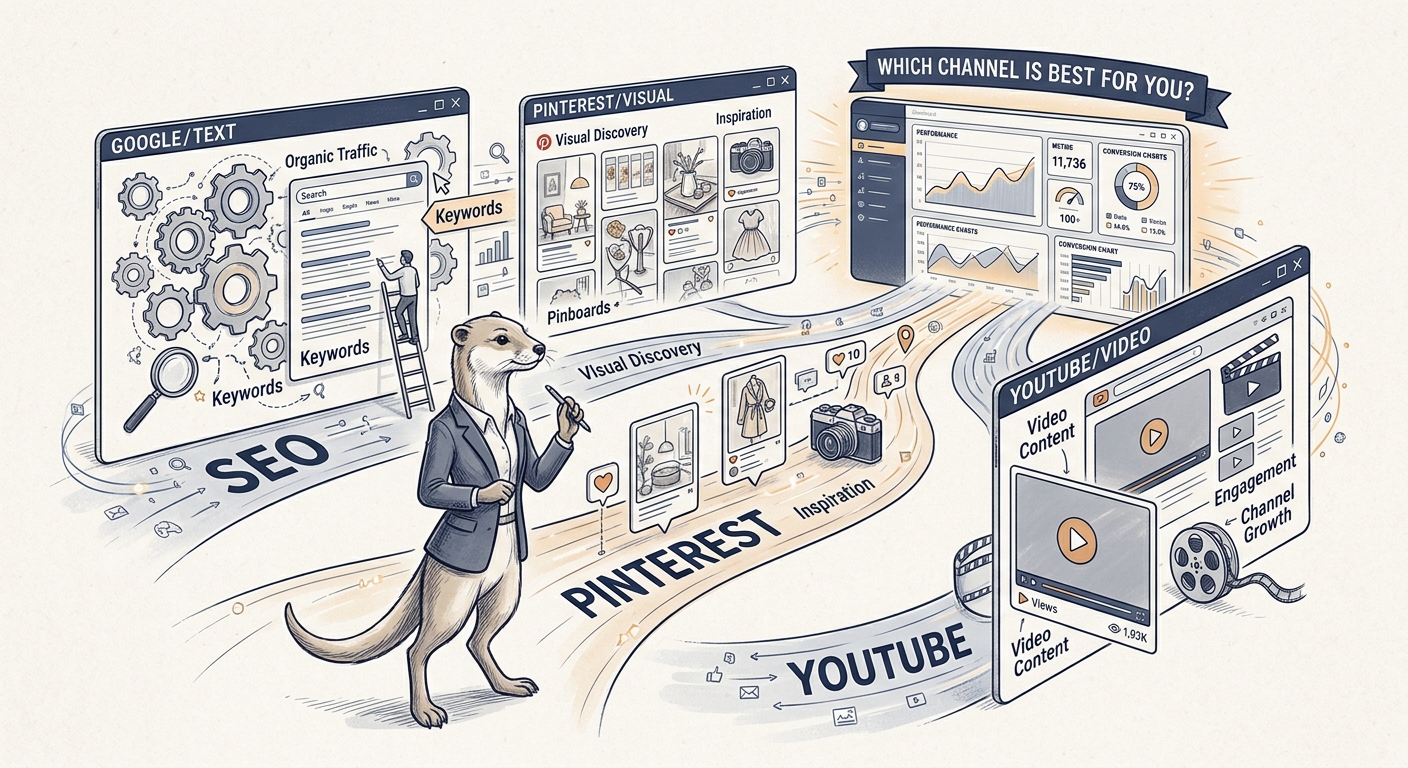
Most beginners stall because they try to master every platform at once.
While SEO, Pinterest, and YouTube are all search-driven, they behave differently. Choosing the right one first depends less on "the best platform" and more on your niche, your skills, and how much time you have.
If you are just starting, read our guide on choosing your first channel before you commit to one.
Quick comparison
Best For: Deep research, reviews, and high-intent problems.
Pace: Slow start (3-6 months), strongest long-term compounding.
Primary Effort: High writing focus, low technical production.
Best For: Visual niches (home, food, fashion, wellness, DIY).
Pace: Faster discovery than Google, very evergreen.
Primary Effort: High design/visual focus, lower text requirement.
Best For: Tutorials, software demos, and building deep trust.
Pace: Moderate start, very high reach via suggestions.
Primary Effort: High production focus (video, audio, editing).
Google is the king of high-intent search. When someone searches for "best web hosting for beginners" or "how to fix a leaky faucet," they are looking for an answer to a specific problem.
Why it works: Once you rank, the traffic is passive and compounds. One good article can earn commissions for years.
The catch: It is slow. Google usually needs 3 to 6 months to trust a new site. You need to be comfortable writing 1,500+ word articles that go deep into a topic.
→ Check out our SEO for Beginners guide to start properly.
Pinterest is not a social network; it is a visual search engine. Users go there to plan projects, find inspiration, and buy products.
Why it works: It discovery-driven and faster than Google. If you create a great pin today, it can start getting clicks tomorrow. It is perfect for visual niches like home decor, fitness, fashion, and DIY.
The catch: It requires consistent visual creation. You need to be comfortable using tools like Canva to make multiple pins for every piece of content you produce.
→ Read our Pinterest guide for more.
YouTube is the second largest search engine in the world and is owned by Google. It allows you to build trust faster than text or images ever could.
Why it works: People buy from people they trust. Seeing a product in action or hearing your voice makes a recommendation much stronger. YouTube search and "Suggested Videos" can bring huge traffic quickly.
The catch: It has the highest barrier to entry. You need to record, edit, and optimize video content. You do not have to be on camera, but you do need to produce high-quality audio and visuals.
→ Compare the formats in YouTube vs Blogging.
If you enjoy researching, organizing information, and writing long-form content, start with Google SEO. It builds an asset you own completely.
If you have a visual niche and prefer making graphics over writing 2,000 words, start with Pinterest. It is the fastest way to see search-driven results.
If you are comfortable demonstrating products or explaining concepts via video, start with YouTube. The trust you build will lead to higher conversion rates.
The goal is not to stay on one platform forever. The goal is to master one first.
Once you have 20-30 articles ranking on Google, you can repurpose them into Pinterest pins. Once you have a successful YouTube channel, you can turn those videos into blog posts for SEO.
Trying to do all three on day one is a recipe for burn out. Pick the one that fits your natural style, stick with it for 90 days, and then reassess.
Once you pick a channel, you need to know what to promote. Use our offer comparison tool to find the right products for your audience.
Try the Offer Comparison ToolExplore the full traffic hub for more guides on free and effective ways to grow your affiliate business.
Back to Traffic Hub